GLXi’s Role in Improving Literacy in Guatemala: Q and A
As the year comes to a close, we wanted to step back and talk more about our core mission in Guatemala, and why it is important. We find this is not only helpful for our current supporters (while many in our valued community have an understanding of our impact and importance, they have asked for ways to help communicate it to others) and also for anyone who is being introduced to Global Learning Exchange Initiative for the first time.
Assisting us with this topic are Dr. Juan Fernando Porres, GLXi’s director of education, and Andrea Tumax, our psychopedagogical intervention and evaluation coordinator.
As Educational Director, Juan Fernando leads the Open Books, Open Minds (Libros Abiertos, Mentes Abiertas) teacher training program, equipping educators with pedagogical and psychological tools to support children's learning. His work emphasizes school readiness, resource optimization, and effective lesson planning, integrating guided reading and writing to foster student independence and academic growth.
In her role, Andrea leads the Psychopedagogical Intervention and Evaluation Program, overseeing student progress assessments, program impact measurement, and reading performance analysis. She also coordinates and implements Open Books In Action (Mentes Abiertas en Acción).
You can learn more about Juan Fernando and Andrea, and the important work they do for GLXiⓇ, here.

“When a child learns to read, the impact reaches far beyond the classroom. Literacy empowers children to continue their education, support their families, and help break cycles of poverty and inequality for the next generation.”
- Jaime Vielman, GLXi Executive Director
Q: First, can you give us a sense of the problem that GLXi is trying to address in Guatemala?
A: GLXi’s mission as a nonprofit is “eradicating illiteracy from the early primary grades” through our Open Books, Open Minds curriculum. It is both a straightforward and complex goal, given the circumstances we are up against.
In many areas of Guatemala, there are multiple, confounding factors that hinder real literacy and effective learning: structural barriers, poverty, inequality, rural and Indigenous contexts, malnutrition, and insufficient resources.
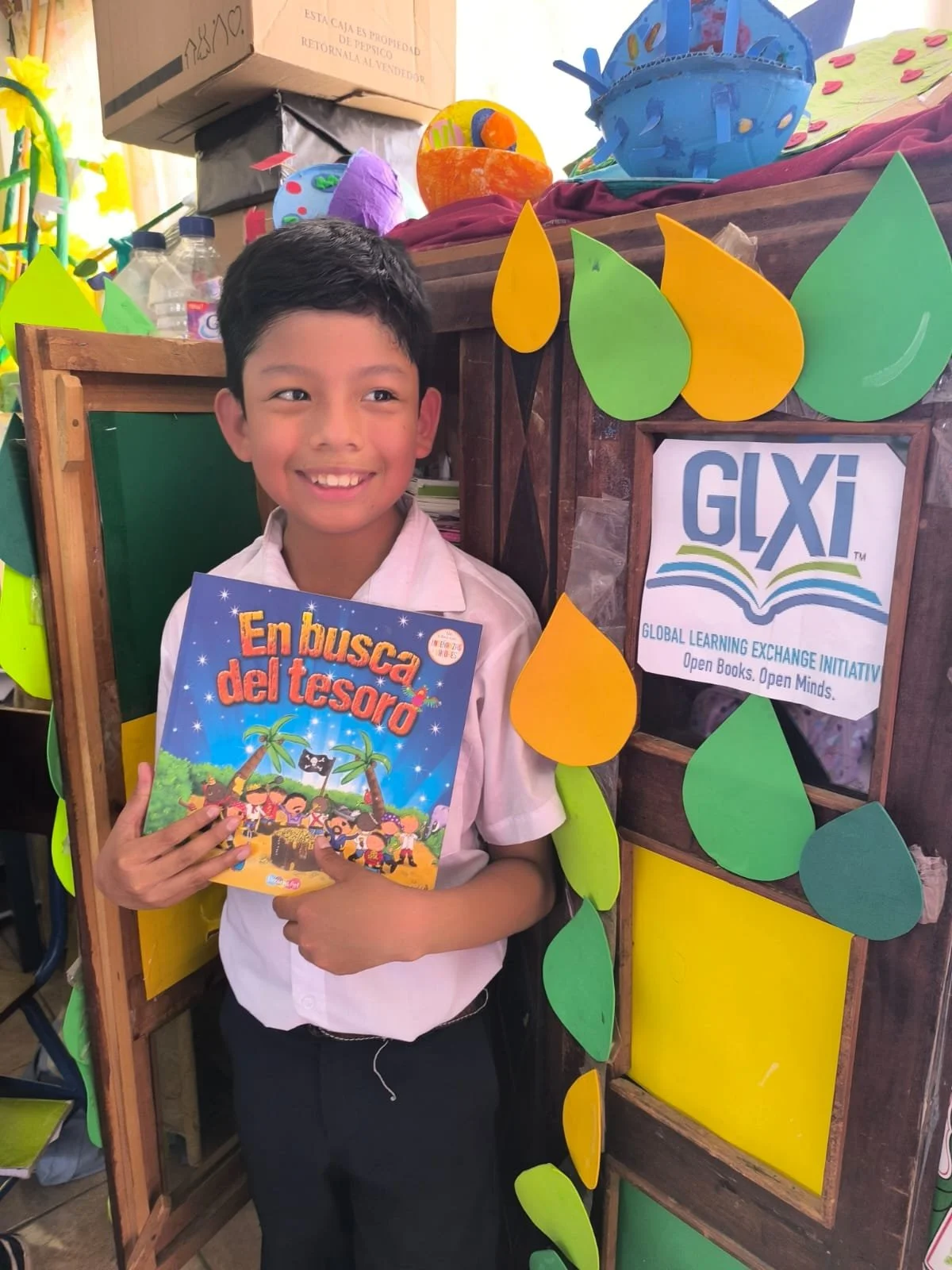
Formal school access alone is not enough. Because the problem is not simply, ‘There are no schools.’
Rather, we have ‘schools and an education system marked by historical inequality, limited resources, insufficient teacher training, and social and cultural inequities.’
GLXi’s solution is ongoing teacher training, a curriculum designed for early literacy, appropriate materials, coaching, and an inclusive approach that considers vulnerable populations.
By addressing these root causes in pre-primary through third grade public school classrooms, we hope to prevent children, especially those in vulnerable contexts, from failing to learn to read and write well.
Q: What are the illiteracy rates in Guatemala?
A: Here are some statistics to consider:
In 2023, according to the Ministry of Education, Guatemala’s illiteracy rate (the proportion of the population over age 15 who cannot read or write) was approximately 27 percent.
Historically, the country had much higher levels: for example, in 1985, the illiteracy rate reached about 52 percent.
UNESCO notes gaps by area, socioeconomic level, and ethnic origin remain very large: In rural areas, among Indigenous or low-income populations, rates of illiteracy and low schooling are significantly higher than the national average.
For example, data shows that among women over age 24, rural women had a literacy rate of about 67 percent, compared to approximately 84 percent of urban women, in a recent study by the University of the Valley of Guatemala.
Q: Are there certain regions of Guatemala where there is a greater need for GLXi’s assistance?
A: The regions with the greatest historical gaps in coverage, literacy, or education quality are often departments in the Highlands and rural areas, such as Alta Verapaz, Quiché, Huehuetenango, Sololá, Totonicapán, and Baja Verapaz.
Q: Why these regions, in particular?
A: These are areas with large Indigenous populations that have been historically marginalized. In these regions, you find a lower educational investment, less access to well-equipped schools, fewer resources, linguistic barriers, poverty, and malnutrition, among other obstacles.
The problem is compounded by insufficient educational infrastructure: Many schools lack basic services (electricity, water, adequate space, proper furniture). It is very difficult to provide a quality education without these bare necessities.
And we also see a shortage of trained teachers (especially bilingual teachers) in areas where they are needed most: for example, Maya communities where there are Indigenous languages and high rates of repetition and dropout.
Q: What is the daily reality for many of the students and teachers that GLXi serves?
A: Picture a school with few or no computers, scarce or nonexistent books, and insufficient teaching materials. This is the daily truth for many of our schools. It makes it difficult for teachers to teach effectively and engagingly, and it limits real learning opportunities.
Many classrooms are located in rural communities with high levels of poverty, child malnutrition, and families with low or informal incomes. This affects children’s health, nutrition, and overall well-being, which in turn impacts their academic performance.

And then we have the language barriers that we mentioned previously.
Q: What does this mean for teachers, in particular?
A: For many teachers, their challenges include long workdays, multigrade classrooms, lack of training, and insufficient resources, which limits their ability to provide quality education.
This is why GLXi’s teacher training, literacy-focused curriculum, coaching, and assessments can make a real difference for these schools.
Q: Many students in GLXi’s participating classrooms have parents at home who never learned how to read. What does this mean for those students?
A: When a child has parents who cannot read or write, the impact is profound. Parents cannot help with homework, cannot read stories, books, or materials, and cannot support the child’s learning.
If they are not literate themselves, they may underestimate the importance of education, or be unable to monitor their children’s learning.
This makes it difficult to create a reading environment at home, and increases the risk that a child drops out or repeats grades.
Q: How does this impact GLXi’s work and the challenge that teachers face?
A: This means that teachers must not only teach the children, but often compensate for the absence of educational stimulation at home.
Their challenge is multi-faceted: they must not only teach literacy, but also build reading habits, a culture of reading, motivation, and community support.
This is why GLXi’s focus is on early intervention (from pre-primary through 3rd grade) with a strong curriculum and teacher coaching. The goal is to not just teach the students in the classroom, but to break cycles of intergenerational illiteracy.

Q: Let’s look into the future. Twenty years from now, what does life look like for the Guatemalan student who learns to read thanks to GLXi’s program, versus the student who does not have access to the same resources and who never learns to read?
A: A student who learns to read with strong support will have reading and writing skills. They will be able to continue their education beyond primary school, to secondary school and maybe beyond, with access to technical or university training.
They will have better job opportunities, improved access to information, and likely, greater civic participation.
And there’s a domino effect. These opportunities can pass to future generations, with the children of this hypothetical student having the same access to a quality education and all it affords. Literacy becomes a lever for social mobility.
In contrast, a student who never learns to read or write well faces a far different future. They may become trapped in cycles of poverty, informal work, and low schooling. They have limited access to well-paid jobs, fewer services, and less civic participation. Their children are likely to face the same barrier. This gap perpetuates intergenerational inequality.
In 20 years, the difference is not only individual but community-wide: communities with education can develop human capital, better living conditions, and opportunities; others fall behind.
Q: When GLXi begins working with a school, what changes?
A: The most tangible, noticeable difference is teacher training. Teachers receive specialized, up-to-date training, pedagogical tools, and ongoing coaching. This includes:
Use of a curriculum designed for literacy, with strategies that are inclusive and adapted to the Guatemalan context, and considerate of cultural and linguistic diversity.
Improved access to reading materials, books, and teaching resources that many schools lack. This raises the quality of teaching and learning.

With these improvements, you also have a measurable impact over time. We’ve found that students in our participating classrooms develop literacy skills in half the time compared to control groups that do not receive the intervention.
Also, by strengthening teachers (not just through a single course, but with continuous workshops and development), a sustainable effect is created. A well-trained teacher can benefit many generations.
Q: How does improving literacy rates help communities?
A: When the majority of people in a community are literate, you have a population that has better access to educational and employment opportunities, and greater access to information, services, and rights. They are more active participants in society (civic, political, and community participation).
For example, literate individuals can read about health, nutrition, and rights; communicate more effectively; and demand services. Education also enables social mobility and breaks cycles of poverty.
And when literacy is approached with cultural and linguistic sensitivity (something GLXi stresses), languages and identity are preserved, and inclusion and equity are promoted.
A literate community understands and advocates for its human rights.
Q: How can the average person help GLXi improve literacy rates in Guatemala?
A: If you live in Guatemala, you can get involved with your community or local schools, offering your time as a tutor, mentor, reader, or as a supporter of community libraries or reading clubs.
However, we know many of our supporters live very far from us. In this case, donations (financial or in-kind) are what help us the most. Your contributions directly fund teacher training, materials, and resources in rural schools. If money is tight, or you have already donated, the most important thing is spreading the word. Please consider sharing GLXi’s work, raising awareness about the importance of literacy, promoting understanding, and encouraging local entities, potential donors, or authorities to support education, and most importantly, to support GLXi.
Your support helps provide the programming that changes the future for Guatemala children. Donate today. https://glxi.org/donate
You can also directly share the link to sponsor: Sponsor Teacher Training — Global Learning Exchange